NEXUX JOURNAL
Real Estate Website Architecture: Building a Portal That Attracts Serious Buyers
A property website needs more than attractive listings. Explore the architecture, search tools, performance, CRM connections and SEO behind an effective real estate portal.
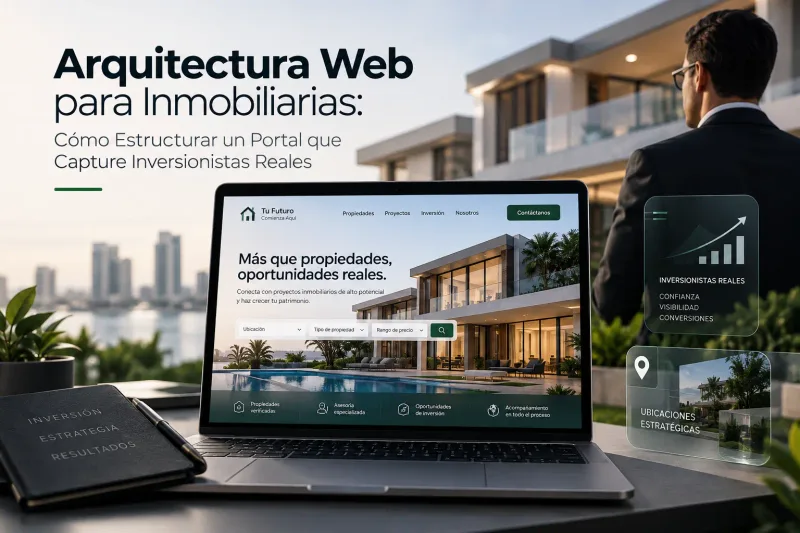
Real estate is a dynamic, commercially valuable and highly competitive sector. Continued growth in residential, tourism and commercial developments has brought more agencies, brokerages and independent advisers into competition for the same investors. Yet many businesses make a costly technical mistake: treating the agency website as a digital brochure rather than designing it as a working sales system.
When a serious investor, retirement fund or family buying a first home visits a property portal, attractive photographs and modern façades are not enough. They want confidence, speed, accurate information and a polished experience reflecting the professionalism of the business behind the screen. Slow loading, confusing navigation or broken price and location filters can cause them to leave within seconds and continue their search elsewhere.
At Nexux Labs, we see visual design as the visible face of a larger digital system. The technical architecture underneath helps retain qualified prospects, support sales and build organic visibility. The following guide examines the commercial and technical foundations an agency should consider when developing, auditing or restructuring its website.
The Limitations of Generic Property Portals
Many underperforming property websites share a weak starting point: a low-cost, ready-made commercial theme chosen without sufficient attention to the needs of a dynamic real estate inventory. These products are designed for broad distribution, rather than the particular scale and complexity of each agency.
A universal template may include a heavy visual builder, unused CSS and JavaScript and unnecessary plugins. The resulting complexity can slow the server, consume memory and create a poor visitor experience.
Unoptimised Images and Infrastructure Under Strain
Visual content is central to property marketing. A portal can contain hundreds or thousands of listings, each with fifteen to thirty high-resolution photographs, 3D renders and video tours. Without suitable infrastructure and image handling, a results page showing twenty properties at once can overwhelm the visitor’s browser.
The result may include Cumulative Layout Shift—unexpected movement while someone reads—partially loaded images and excessive waiting. These technical problems undermine confidence. A buyer considering a transaction worth hundreds of thousands of dollars expects an agency’s website to show the same care as its professional service.
Foundations of a High-Performance Property Platform
A portal intended to generate inquiries consistently needs to be planned as a structured web application, rather than simply a set of information pages. This involves careful decisions about how property data is stored, queried and presented.
Structured Data: Custom Post Types and Meta Fields
Property inventory has requirements that go beyond a conventional blog or a generic online shop. Each property is a distinct data entity, with related attributes such as geographic location, sale or rental price, bedrooms, built and land area, amenities such as a pool, gym or home automation, legal status, development stage and responsible agent.
In a WordPress-based implementation, custom post types and advanced custom fields can model these requirements. The data structure is designed around the language and relationships of real estate. When the foundations are logical, the administration interface becomes easier for agency staff to use. The team can add listings, change prices, update information or withdraw properties without depending on a developer or disrupting the portal’s presentation.
VPS Infrastructure and Performance
A large property catalog can struggle on shared hosting when it competes with hundreds of other websites for memory, bandwidth and processing power. The choice of infrastructure should match the demands of the catalog and its traffic.
Paid campaigns on Google Ads and Meta Ads, interactive maps and simultaneous complex searches can create substantial demand. A high-performance Virtual Private Server (VPS) provides dedicated resources. Combined with appropriate server software such as OpenLiteSpeed or Nginx, in-memory caching through Redis or Memcached, and a Content Delivery Network (CDN), it supports fast property delivery for local and international visitors.
User Experience and Dynamic Search
The search and filtering system is central to a property portal’s usefulness. Visitors are accustomed to the immediacy of platforms such as Airbnb and Zillow. They do not want to browse endless category menus or click “Next” ten times to find a penthouse within their budget.
Asynchronous Filters and Smooth Navigation
Interactive filters can use AJAX to update results without reloading the entire page. A visitor might adjust a price slider, select “3 bedrooms” and choose “Beachfront”; the property results should respond clearly and promptly.
This approach reduces friction and helps a prospect stay engaged with the catalog. Being able to explore relevant options comfortably can increase the likelihood of an inquiry or appointment request.
Mobile First: Designing for the Thumb
The source article places initial mobile traffic to property portals at more than 70%. A website that merely shrinks to fit a small screen is not enough. Mobile-first design considers thumb-reachable calls to action, galleries that respond naturally to swipe gestures and interactive maps that do not trap the page’s scrolling.
The article’s point is that a poor phone experience can put as many as seven out of ten prospective customers at a disadvantage before they even reach a property’s price.
Strategic Integrations: From Visits to CRM Records
Capturing an email address is only the start. A real estate agency needs an organized follow-up process, rather than an unstructured inbox. Customer Relationship Management (CRM) systems such as Salesforce, HubSpot and specialist real estate tools can support that work.
The website’s architecture should allow suitable two-way API connections with the CRM. When someone requests information about a particular villa, the inquiry can enter the sales system, create a customer record, be assigned to an agent and trigger the agreed email sequence. Automation reduces delays in a market where timely follow-up can make a significant difference.
Structural SEO for Real Estate
Even a strong property catalog has limited commercial value if prospective customers cannot find it. Real estate search is highly competitive and requires technical structure and content to be considered from the beginning.
URL Architecture, Programmatic SEO and Semantic Hierarchy
Search engines need to understand a property’s location, type and availability. Professional architecture produces logical, readable and scalable URLs. Rather than unintelligible addresses full of symbols and internal IDs, a route such as /apartamentos/venta/distrito-nacional/piantini describes a meaningful property category and location.
Programmatic SEO can support these relevant landing pages, helping a portal address specific search intent. The structure should serve genuine visitor needs rather than generate arbitrary pages.
Performance and Core Web Vitals
Core Web Vitals assess important aspects of page experience, including responsiveness and visual stability while resources load. A technical foundation with lean source code, automated image optimization, modern formats such as WebP and native lazy loading can improve the experience delivered by a property portal.
Performance work supports the wider SEO strategy and the credibility of the agency’s digital presence.
Security and Ongoing Maintenance
Launching a property portal marks the beginning of its operational life, rather than the end of development. A platform handling customer information, inquiry forms and constantly changing inventory is a business asset that needs active care.
As browsers evolve and threats such as SQL injection, brute-force attacks and malware develop, maintaining the technical foundation becomes essential. Vulnerabilities can affect the catalog, expose prospect information, damage trust and create legal consequences. Appropriate care includes server security patches, core software updates, SSL configuration and automated daily cloud backups.
Professional maintenance by a team familiar with the platform helps keep the website fast, secure and available, protecting both the agency’s reputation and the value of its digital investment.
Raising Your Agency’s Digital Standard
Today’s property market demands speed, transparency, clear information and systems that keep pace with customers’ decisions. Competition is no longer determined only by a prominent billboard or an impressive office. The ability to attract, retain and handle inquiries also depends on a strong digital foundation.
At Nexux Labs, we develop corporate digital platforms around conversion and scalability, rather than stopping at information pages. If your agency is ready to modernize its online presence, improve inventory management and make its website a practical source of investment inquiries, start by reviewing the architecture behind the business. The foundations of your next sale may begin in the code.
Design, technology and decisions that move your business forward.
Meet Nexux